Commercial Loan Terms and Requirements
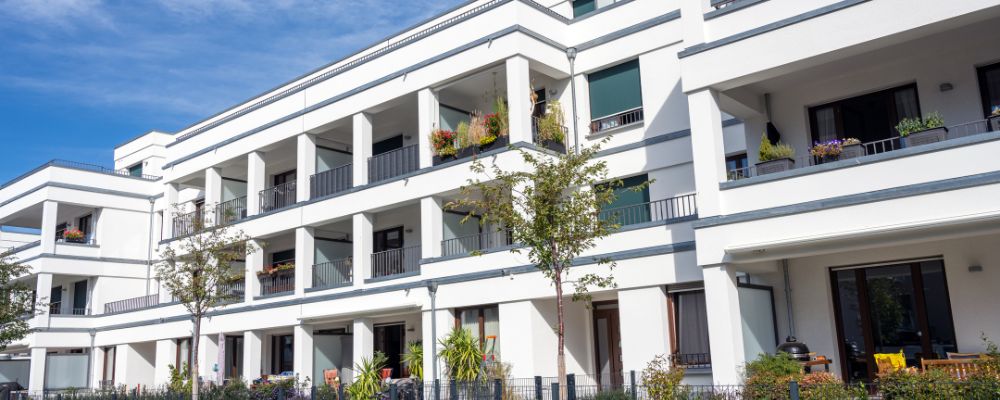
A commercial real estate loan is used to finance the purchase, construction, or development of income-generating properties intended for business use. This includes offices, retail spaces, hotels, apartment complexes, warehouses, and, in some cases, undeveloped land. Commercial real estate loans are secured by a lien on the commercial property itself and are typically issued to corporations, partnerships, or entities that manage and invest in commercial real estate. There are three primary types of commercial real estate loans: permanent mortgages, SBA loans, and bridge loans.
Most Common Commercial Real Estate Loan Terms:
1. Loan Amount (Principal)
The principal loan amount is the initial sum a borrower receives from a lender when taking out a commercial real estate loan. It serves as the foundation for calculating interest, fees, and monthly payments over the loan term. This amount is crucial in determining the total cost of borrowing and plays a major role in how much financing a borrower can secure.
Several factors influence the principal loan amount, including the value and location of the commercial property, as well as the borrower’s financial profile and credit history. Lenders also take into account broader market conditions and interest rate trends. Importantly, two key metrics — Loan-to-Value (LTV) ratio and Debt Service Coverage Ratio (DSCR) — help determine the lender’s risk and how much they’re willing to offer. The higher the appraised value and borrower qualifications, the greater the potential for a higher maximum loan amount.
- Base amount used to calculate interest and monthly payments
- Determined by property value, borrower profile, and market conditions
- LTV and DSCR help lenders assess risk and set loan limits
2. Interest Rate
The interest rate on a commercial loan represents the cost of borrowing, expressed as a percentage of the principal loan amount. Due to the fact that commercial loans typically carry more lender’s risk than residential loans, interest rates tend to be higher. These rates can either be fixed, providing stability over the life of the loan, or variable, which fluctuate based on financial benchmarks like SOFR or the Prime Rate. Fixed interest rates are ideal for long-term planning, while variable rates may offer short-term savings but come with future uncertainty.
Multiple factors influence the interest rate applied to a commercial real estate loan. These include general economic conditions like inflation, monetary policy, and investor demand for credit. Lenders also assess the specific risk tied to the loan, including the type of commercial property being financed, its location, and the borrower’s credit history and business performance. Properties in stable, high-demand areas tend to attract lower interest rates, while those with a higher risk profile will typically be charged more.
The structure of the loan itself further impacts the interest rate. A high Loan-to-Value (LTV) ratio increases risk for the lender, often resulting in a higher rate. Shorter loan terms generally come with higher monthly payments but may offer slightly better interest rates, while longer terms reduce payments at the cost of a slightly higher rate. Lender policies and underwriting criteria also vary, meaning different institutions may offer significantly different rates for the same borrower profile.
- Interest rates are higher for commercial loans due to added risk
- Fixed rates offer stability; variable rates follow market conditions
- Economic factors like inflation and policy drive rate trends
- Property type and location influence the risk and rate offered
- Strong credit score and business performance lead to better rates
- Higher LTV ratios typically result in higher interest rates
- Loan term and amortization structure directly impact rate and payments
- Lender policies vary, so rate offers can differ between institutions
3. Loan Term (Maturity)
The loan term, or maturity, refers to the length of time a borrower has to repay a commercial loan in full. This period typically ranges from 5 to 20 years for most commercial real estate loans, although some may extend longer depending on the loan type. Shorter terms usually come with higher monthly payments but lower overall interest costs, while longer terms reduce monthly payments but may result in paying more interest over time.
The ideal loan term depends on the borrower’s financial goals, projected steady cash flow, and investment timeline. Lenders consider the term when evaluating the risk of the loan and setting interest rates. A shorter term often signals a lower lender’s risk, while longer terms might involve higher rates to compensate for extended exposure.
- Defines how long the borrower has to repay the commercial loan
- Shorter terms = higher monthly payments, lower interest cost
- Longer terms = lower payments, higher total interest
- Loan term affects loan pricing and lender’s risk assessment
4. Amortization Schedule
The amortization schedule outlines how a commercial real estate loan is paid off over time, breaking down each monthly payment into interest and principal components. This schedule determines how quickly the principal loan amount is reduced and directly affects the total interest paid over the life of the loan. Most commercial loans have monthly payments structured around either full or partial amortization.
A fully amortizing loan is paid off in full by the end of the term, while a partially amortizing loan requires a balloon payment at maturity. A typical commercial loan might have a 25-30 year amortization schedule, even if the loan term is only 5 to 10 years. Interest-only loans are another option, where borrowers initially pay only interest before transitioning into amortizing payments. Each structure impacts monthly payments and how much interest accrues over time.
- Defines how principal and interest are repaid over time
- Fully amortizing loans end with a zero balance
- Partial amortization leaves a balloon payment
- Standard schedules: 25–30 years amortization with 5–10 year terms
- Interest-only periods delay principal repayment
- Amortization period affects monthly payments and total interest paid
5. Loan-to-Value Ratio (LTV)
The Loan-to-Value (LTV) ratio measures how much of a property’s value is being financed through a commercial loan. It’s calculated by dividing the loan amount by the appraised property value. This ratio helps assess the lender’s risk — higher LTVs mean the borrower is financing a larger portion of the property, leaving less equity in the deal, which increases potential risk.
In commercial real estate loans, typical LTV ratios range from 65% to 80%. A lower LTV often leads to more favorable loan terms, including better interest rates, because it signals that the borrower is investing more equity upfront. Lenders closely consider LTV when deciding loan approvals, especially for unsecured loans where collateral may be limited.
- LTV = Loan Amount ÷ Property Value
- Reflects the percentage of a property's value financed by the loan
- Lower ratios mean more borrower equity and reduced lender exposure
- Most commercial loans fall within a 65% to 80% LTV range
- LTV plays a key role in loan approvals and rate offers, particularly for unsecured loans
6. Debt Service Coverage Ratio (DSCR)
The Debt Service Coverage Ratio (DSCR) evaluates a property’s ability to generate enough income to cover its debt obligations. It’s calculated by dividing the property’s Net Operating Income (NOI) by its total annual debt service, which includes both interest and principal payments. This ratio is a crucial metric used by lenders when underwriting commercial loans, as it directly reflects the borrower’s capacity to manage monthly payments over time.
A DSCR of 1.0 indicates that the property is earning just enough to cover its debt, while anything below 1.0 suggests a shortfall in income. To minimize risk, most commercial real estate lenders require a DSCR of 1.20 to 1.50, ensuring a healthy buffer above the break-even point. Properties with a higher DSCR are considered less risky and are more likely to qualify for favorable loan terms.
- Measures whether a property's income can cover its debt payments
- A DSCR of 1.0 = break-even; below 1.0 = insufficient income
- Lenders typically look for a DSCR between 1.20 and 1.50
- Higher DSCRs reduce lender’s risk and improve loan eligibility
7. Appraisal and Inspection Fees
Appraisal and inspection fees are essential components of the commercial real estate loan process. An independent appraisal is typically required by the lender to determine the fair market value of the property being financed. This valuation serves as the basis for calculating the Loan-to-Value (LTV) ratio, which influences the approved loan amount, interest rate, and overall loan terms.
Depending on the asset type and the specific commercial loan structure, a property inspection may also be required. Inspections help assess the physical condition and risks associated with the property. Both appraisals and inspections are paid for by the borrower and are critical in helping lenders evaluate collateral strength and protect against potential loss.
- Appraisals establish property value for loan collateral
- Results impact LTV ratio and commercial loan terms
- Inspections may be required depending on property type and loan structure
- Borrowers are responsible for both appraisal and inspection costs
8. Legal & Closing Costs
Legal and closing costs are important financial considerations when securing a commercial real estate loan. Legal fees vary depending on the complexity of the transaction, property size and location, and the attorney’s hourly rate. These costs typically range from 1% to 5% of the total loan amount and may cover services such as document preparation, contract review, and legal due diligence.
Closing costs include a wide range of fees related to finalizing commercial loans. These may involve title searches, title insurance, appraisal costs, credit checks, underwriting, and loan processing. Some charges, like origination fees or inspection costs, are often based on the property’s size or value. Borrowers should factor in these expenses early, as they can affect total financing needs and cash flow planning.
- Legal fees vary based on property details and attorney rates
- Typically range from 1% to 5% of the commercial loan amount
- Closing costs include title, appraisal, credit, and processing fees
9. Origination Fees
Origination fees are lender charges applied at the start of a commercial loan to cover the cost of processing the application and structuring the financing. These fees typically range from 0.5% to 2% of the total loan amount and are calculated upfront. They help cover administrative work such as underwriting, due diligence, and preparing legal documents.
For borrowers, origination fees are a key part of the overall cost of securing a commercial real estate loan. While some lenders may offer flexibility depending on the deal size or borrower profile, these fees are generally standard across the industry and should be factored into closing cost estimates early in the process.
- Covers lender costs for processing and underwriting the commercial loan
- Typically 0.5% to 2% of the total loan amount
- Standard part of closing costs and financing structure
Hard Money Loans
Data driven hard money lending. Get your loan in under 10 minutes
Commercial Real Estate Loan Resources
Discover the best commercial real estate lenders offering competitive rates, flexible terms, and reliable financing solutions
These commercial real estate loans are designed to cover everything from land acquisition to construction costs
Commercial hard money loans focus primarily on the value of the property rather than the borrower’s credit profile. They are more flexible than traditional loans.
Learn the key factors that impact commercial loan interest rates and how to secure the most favorable financing for your investment.
This comparison explores the key differences between commercial loans and residential loans.
Underwriting determines the level of risk associated with a commercial real estate loan, while factoring in the potential returns.
The typical down payment for purchasing a commercial property ranges from 10% to 35% of the purchase price, with the minimum generally starting around 10%.
Commercial real estate loans are used to purchase, build, or develop income-producing property for business use, such as office buildings, retail centers and hotels
Small balance commercial loans are designed to finance lower-cost commercial properties, typically ranging from $250,000 to $5 million
This guide explains all the main types of commercial real estate loans and how they are tailored to different investing strategies.
A commercial DSCR loan is a type of real estate financing used primarily for income-generating properties.