Construction Loan Rates
Ground Up Loans For Residential Builders
Interest Rate
9.75 - 11.25%
Origination fee
1 - 2%
Loan To Cost (LTC)
up to 90%
Construction Financing
up to 100%
Loan To ARV
up to 75%
Term
18 months
Minimum Loan Amount
$100,000
Maximum Loan Amount
$5,000,000
Minimum FICO
650
Type of Property
Residential 1-4 units, condos, townhomes
Construction Loan Rates In 2026
In 2026 construction loan rates generally range from 9.75 to 11.25%
Construction loan rates generally range between 9.75 and 11.25%, depending on the lender. Construction loan rates are typically higher than primary mortgage rates and other loan types due to the fact that they’re shorter loans that carry a higher risk for lenders. Construction loan rates are based on a number of factors that include:
- Market Conditions: The prevailing market conditions in the economy and the real estate market as a whole have a major impact on construction loan rates. When the economy is strong, rates tend to be higher. The demand for loans is also a key factor in determining rates.
- Borrower’s Financial Position: While home construction loans don’t usually focus on a borrower’s credit score and financial history as the main requirement, these can still factor into the loan rate decision. Borrowers with lower credit scores may have to pay higher rates on their construction loans.
- Location: The location of the property plays a part in determining the loan interest rate. Some areas may have higher rates due to the local real estate market conditions and the value of properties in that area.
- Lender Terms: Construction loan lenders all have their own terms, which include interest rates. These are based on factors determined by the construction loan lenders.
- Loan To Value (LTV) Ratio: The LTV ratio is the ratio of the loan amount to the appraised value of the property. Usually, the lower the LTV, the lower the interest rate on a construction loan will be because the risk is lower for construction loan lenders. The typical LTV for construction loans is around 75%.
Origination Fee
The origination fee on home construction loans is the fee charged by the lender to process and facilitate the loan. The origination fee is usually calculated as a percentage of the total loan amount, for example if the origination fee is 2% and the loan is $200,000, then the origination fee would be $4,000.
Construction Loan Origination fees range from 1 – 2%, depending on the lender. The origination fee often needs to be paid at the beginning of the construction loan process, which means the payment will occur at the loan application or the closing of the construction loan.
Additional Closing Costs
In addition to the origination fee, there are other costs that will need to be paid when the loan closes. These additional closing costs are approximately 2% of the construction loan amount. Some common additional closing costs on construction loans include:
- Appraisal fees: To determine the value of a property, lenders will usually require a property appraisal. This helps a lender work out the LTV ratio on the property. Borrowers may be liable for this, which costs a few hundred dollars.
- Title insurance: Title insurance protects the lender and the borrower from any issues with the property’s title, such as liens or disputes. The cost of title insurance varies depending on the loan amount and location.
- Legal and escrow fees: An escrow account needs to be established to hold the construction funds before they are disbursed. Home construction loans may require an escrow fee to cover the costs of this. Along with this, they may require legal fees to cover any legal services that were required.
- Credit report fees: Lenders typically need to pull a credit report to determine the borrower’s credit score and history. As such, lenders may charge a credit report fee to cover the cost of pulling this report.
- Insurance costs: Insurance may be required to cover builders, or the property from damage. The cost of insurance depends on the property’s size and the location; however this is an additional cost to consider on construction loans.
Realtor Fee
Real estate agents charge a commission on their real estate deals, which is called a realtor fee. While a realtor fee is not usually associated with construction loans, if the completed property is sold through a real estate agent, a realtor fee may apply. This fee is usually about 3% of the cost of the land.
How To Apply For A Construction Loan
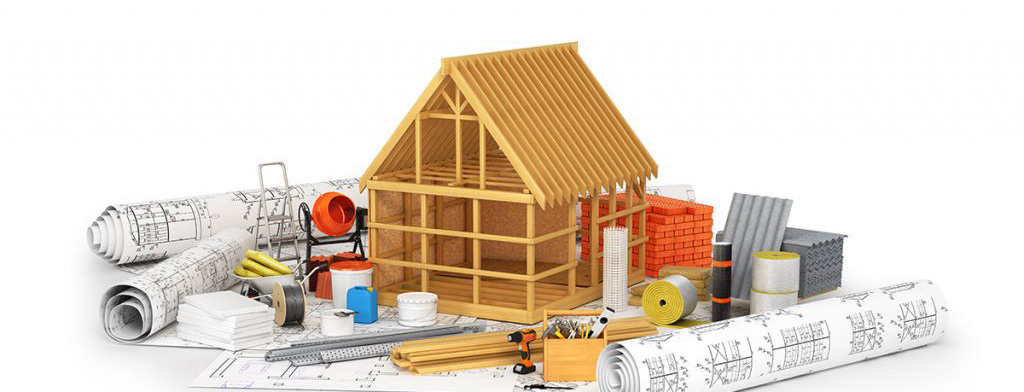
Applying for a construction loan differs from a traditional mortgage loan application. Here’s a step-by-step guide.
Step 1: Project Preparation
Clearly define your construction project, including the type of property you plan to build or renovate, project scope, budget, and timeline. With this, evaluate your financial situation by looking at your credit score, income and debt, to determine the size of the loan you’ll need.
Step 2: Choose A Lender
Compare the rates and terms of a few construction loan lenders once you’ve done detailed research on this. Select a lender that is experienced in construction lending.
Step 3: Gather Required Information
Your next step is to gather all the documents that the lender will require. These include a project plan, financial documents that will demonstrate that you can repay the loan, a credit report, and an estimate of the down payment that you’ll be able to make. Ensure that you have all the relevant documents that the lender needs, then complete the loan application.
Step 4: Accept Loan Terms
Once the lender has reviewed your application and supporting documentation, the loan terms will be provided. These include the loan rates, repayment period, loan amount and fees. Make sure that you understand and have read everything that has been outlined here as you will be bound to this.
Step 5: Loan Closing
Once you’re satisfied with this, you’ll sign the loan agreement and pay the closing costs that are associated with the loan. These costs can include origination fees, appraisal fees, and other administrative expenses. Your down payment will also be due, and from there you’ll receive the funds.
Frequently Asked Questions
Will Construction Loan Rates Go Up Or Down Over The Next Year?
According to the latest NAHB data from the second quarter of 2025, interest rates for Acquisition, Development, and Construction (AD&C) loans have continued to remain elevated, with average rates reaching 11.77% for land development loans, 12.82% for speculative single-family construction loans, and 12.73% for pre-sold single-family construction loans.
Credit conditions have also remained tight for fourteen consecutive quarters through Q2 2025. However, there are encouraging signs for borrowers looking ahead. The Federal Reserve cut interest rates by 0.25 percentage points in September 2025, bringing the federal funds rate to 4.00%-4.25%. Market expectations point to additional rate cuts in October and December 2025, driven primarily by concerns over a weakening labor market.
NAHB | Morningstar
Do Construction Loans Offer Interest Only Payments?
A traditional mortgage would require you to begin repaying the interest from the first payment, however construction loans allow for interest only payments. This means that borrowers only need to cover the interest in their repayments, while the construction phase is happening. After that, the repayments will need to cover the principal amount as well. This is particularly useful for builders or investors, as the construction phase is an expensive period of time.
How Do Interest Only Payments Work?
When it comes to construction loans, borrowers are required to make payments against the interest that is accumulating on the outstanding loan amount (ie: interest only payments), during the construction phase. This phase may last a few months or even a year, and during this time, borrowers will make interest only payments on the loan each month. However, the loan amount will not decrease in any way as only the interest is being covered.
Once the construction phase has been completed, the principal loan amount will need to be repaid. This can be done in various ways, one of the most common is via a 100% balloon payment. Borrowers typically repay the outstanding loan amount by selling the property, refinancing with a traditional mortgage, or using other available funds.
Why Are Construction Loan Rates Higher Than A Traditional Mortgage?
Construction loans are typically short-term loans that span over the duration of the construction project. Some of them may cover the purchase of the home, while others may not. They have higher interest rates and require a significant down payment to mitigate the risks that come with these loans.
The length of construction loans plays a part in the loan rates because shorter loan terms typically result in higher interest rates. Unlike traditional mortgages which run between 15 and 30 years.
During the construction period, borrowers only need to cover the interest payment each month, before paying the principal loan amount back at the end of the construction period. This is a higher risk for lenders, so the interest rate is higher to compensate for this. Whereas traditional loans require payment of both the interest and the principal loan amount from the start, in smaller increments over a longer period.
Construction loans are a higher risk for lenders than traditional mortgages because the completed property doesn’t exist yet when the loan is taken, whereas a traditional mortgage is based on an existing property. Construction projects notoriously have delays and the potential to cost more than expected, which also makes construction loans a higher risk and therefore requires higher loan rates.
What Happens When The Loan Terms End?
When home construction loan terms end, there are various scenarios that can occur…
For real estate investors, there is typically a 100% balloon payment that will be due, which is usually paid by the sale of the completed property or using other funds to pay off the debt.
Some construction loans can be converted to a permanent mortgage when the construction loan terms are finished. In this case, the loan automatically converts into a long-term mortgage, such as a 15, 20, or 30-year fixed-rate mortgage. The borrower will then make regular mortgage payments, including both principal and interest.
Another scenario is that borrowers can refinance the construction loan into a traditional mortgage. This involves applying for a new mortgage loan with more favorable, longer terms to pay off the construction loan.
It’s important for borrowers to understand the terms of their particular construction loan and to have an exit strategy in place for the end of the loan terms. Failing to do so can result in unexpected financial challenges.
Additional Resources

This Construction Loan Calculator quickly works out the maximum loan amount that you can qualify for when applying for a Construction Loan.
First and foremost, you need to know the location of the development and you also need to have building plans and permits.
The typical down payment on a construction loan is between 10% and 20% of the total project cost.
Some lenders are better than others. This guide reveals the Best Construction Lenders at this moment in time.
This guide explains out how you can get started in the Construction Industry.
On average construction workers make over $50,000 annualy.This resource explores how much construction pays, on average.
This is a step-by-step guide which explains how to start a Construction Business.
There are 3 main types of Construction Loan. This guide highlights the differences between them.
There are various US banks providing different Construction Loan options for real estate investors
There are a number of differences between a Construction Loan and Mortgage. Each difference is fully explored in this guide.